
CT Scan
What is a CT Scan
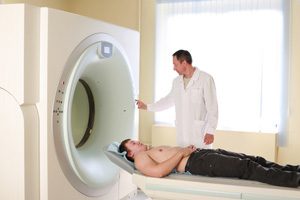
A CT (Computerised Tomography) is a computer-assisted X-ray procedure that can be used to visualise any internal structure of the body.
How will this test help in the management and treatment of your IBD?
A CT scan is ordered for various reasons. Some of the reasons it is ordered include indentification of strictures (or areas of narrowing in the bowel) or localization of any abscesses (collections of infection).
What’s involved?
- Before the procedure: For scans of the abdomen, a regime of no food and drink for several hours prior to the procedure is usually required. It is important to follow instructions as food and food remains can mimic disease when the oral contrast is present. On the day you may also be asked to consume some oral contrast “dye” on the day of the scan. You can drink this while you are waiting in the waiting room
- During the procedure: in the examination room you will be positioned horizontally (lying down) on the CT table with your abdomen in the centre of a large cylinder. On one side of the cylinder is an X-ray tube that will project an X-ray beam through your abdomen to an X-ray detector mounted on the other side. The x-ray tube and scanner will automatically rotate around your abdomen, taking many individual photographs as they rotate. During this time you will be instructed to hold your breath. This helps to eliminate blurring from the images, which can be caused by breathing or other motions. Sometimes an injection is also required during the procedure. If an injection is required, two sets of pictures will be taken (one set with intravenous contrast and one set without intravenous contrast)
- After the procedure: If you were administered an injection, you may be required to stay for a short period of time after the scanning is complete. Length of procedure: The total time taken to complete the procedure is around 30 minutes
CT Scan – Commonly asked questions
Will drinking the contrast dye impact my stoma?
No.
Handy tip: Wear loose fitting clothes without zippers or metallic parts, because they can obstruct image clarity.